Hair Growth
Shedding
What we did
FoLix · 4 sessions
Timeframe
5 months
Nurse Practitioner
Katie Wills
Outcome
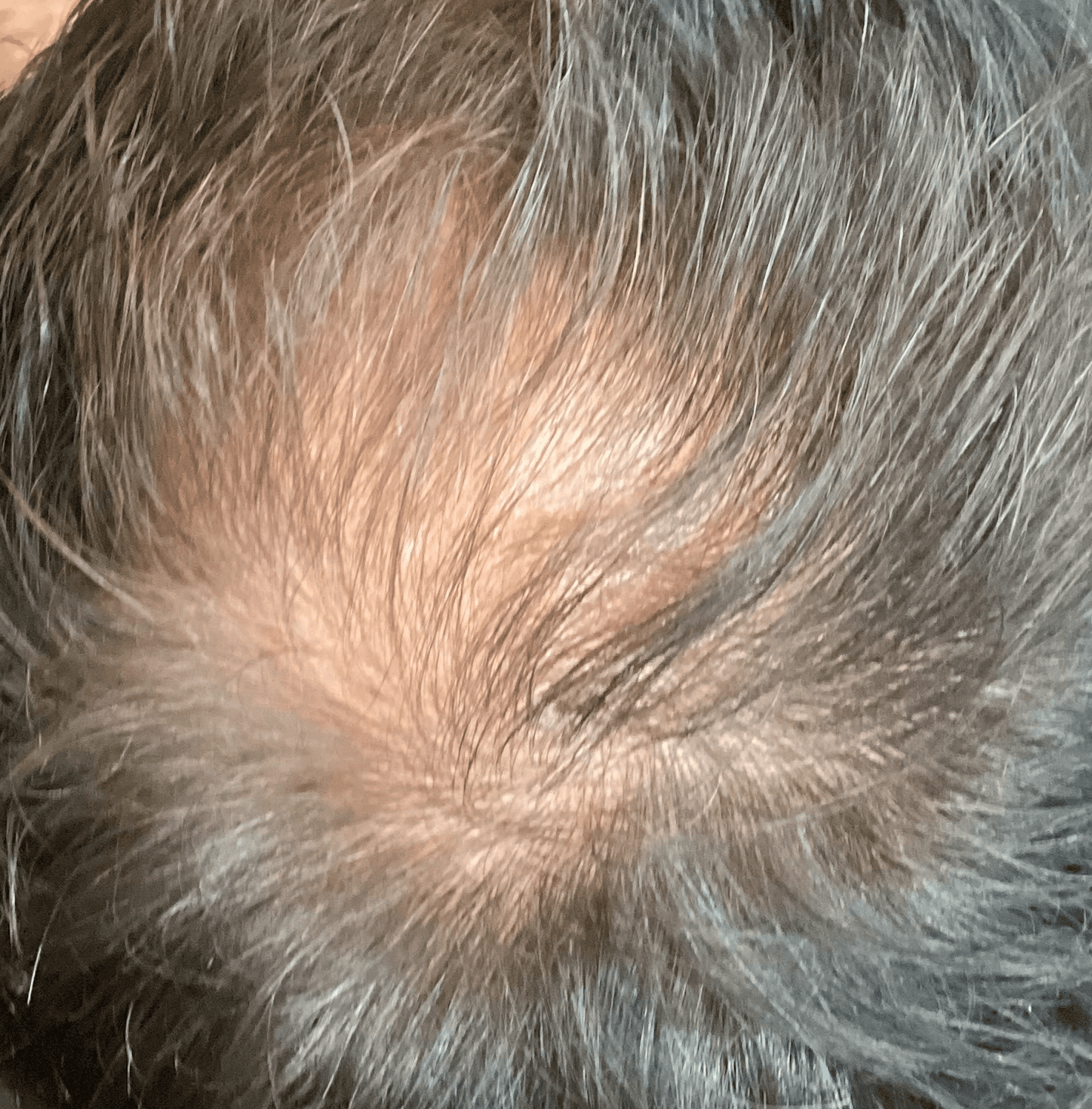
Before

After
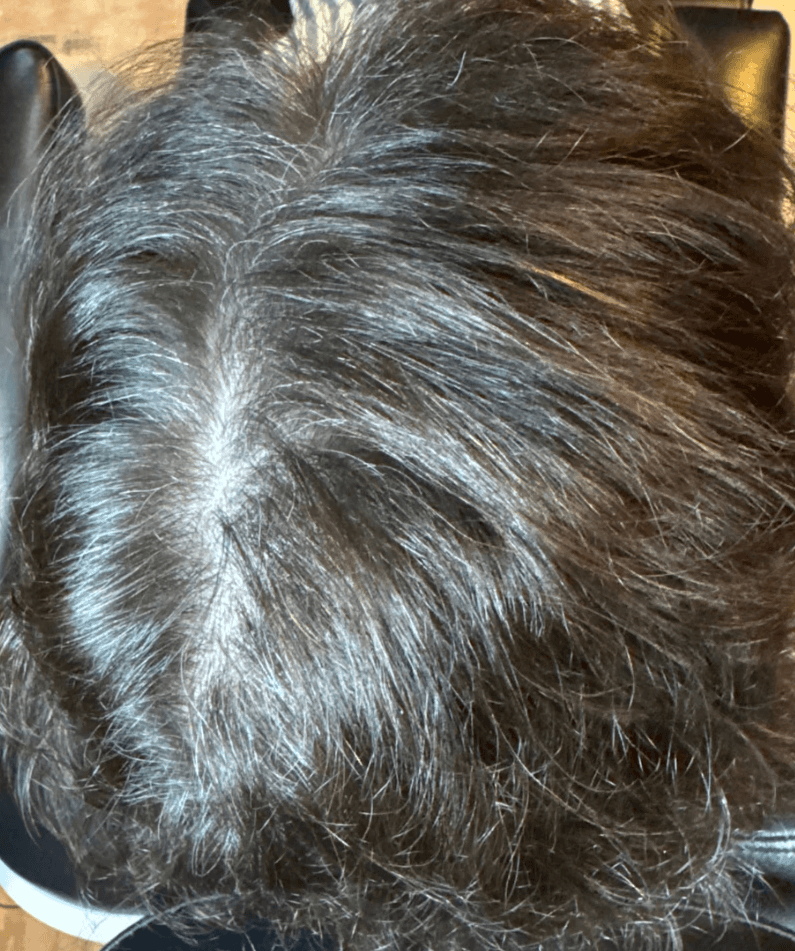
After Years of Thinning, Her Hair Is Growing Back
Anna* was in her 20s when she first noticed her hair thinning. Over the next five to six years, she saw stylists and doctors, and she was told her hair was just, thin. She was told to cut it short. She was fitted for a topper.
Nobody looked for a cause.
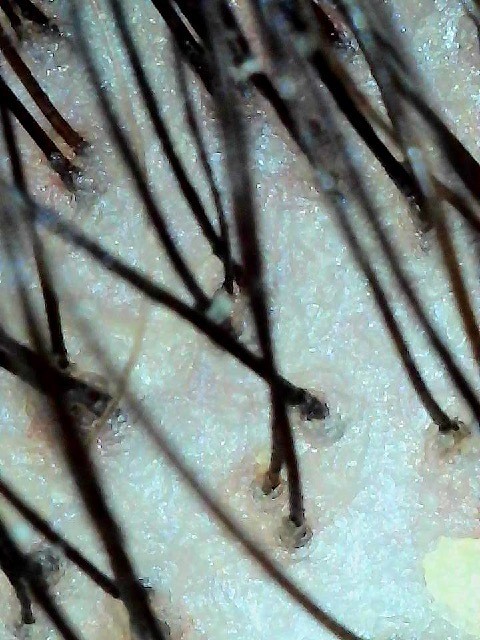
When she came to Elysian, Katie Wills ran a full trichoscopic scalp analysis and reviewed her complete medical history. Within that intake, she found it — a medication Anna had been taking for years, one with a documented association with ongoing hair loss. The thinning wasn’t genetic destiny. It was a correctable problem that had gone unidentified for half a decade.
Four FoLix sessions later, Anna has approximately 30% more hair density than when she walked in. She is learning, for the first time, how to cut and style hair that has come back with a curl she didn’t know she had.
What Was Actually Happening
After a stressful event, pregnancy, or acute illness, some people experience a sudden and severe shedding called telogen effluvium.
Anna’s case was different. Chronic telogen effluvium doesn’t resolve on its own because the trigger doesn’t go away. As long as the offending medication was present, her hair follicles stayed locked in a shedding cycle with no natural exit.
Trichoscopic analysis at her first appointment showed miniaturization across 70 to 90% of her scalp — meaning the follicles weren’t just shedding, they were shrinking. Her scalp showed active dryness and irritation. The hair shafts were damaged and porous. Critically, the follicles were still viable, meaning with treatment they might be able to recover. That was the window.
CLINICAL NOTE: Follicle viability at baseline is the single most important factor in determining whether a hair loss treatment can produce meaningful results. Miniaturized follicles that retain viability can respond to treatment. Follicles that have fully closed cannot. Early clinical assessment — before miniaturization becomes permanent — significantly expands what is possible.
Why FoLix?
The FoLix laser is a 1565nm non-ablative fractional laser system — the first laser device of its kind cleared by the Food and Drug Administration specifically for hair loss in adults. Developed by Lumenis, a global leader in energy-based medical treatments, FoLix laser technology works by delivering precise pulses of laser energy beneath the scalp surface. This creates thousands of tiny controlled micro-thermal zones in the dermal layer where hair follicles live.
The skin surface stays intact. There is no downtime, no needles, no chemicals.
What happens beneath the surface is a carefully triggered biological response. Blood flow to the hair follicles increases. The body’s natural healing signals — cytokines and growth factors — activate at the follicle bulb and bulge. Fibroblast activity increases. Collagen forms. Hair follicles that have been operating well below capacity begin to respond through a process called hair stimulation — the core mechanism behind FoLix treatment.
This is meaningfully different from medical treatments like minoxidil or finasteride, which work systemically and require ongoing daily use to maintain results. It is also distinct from PRP, or platelet-rich plasma therapy, which involves drawing and reinjecting the patient’s own blood to deliver growth factors directly to the scalp. FoLix delivers a non-invasive, chemical-free alternative — or a complementary layer — to those existing options. Unlike a hair transplant, which relocates follicles from one area of the scalp to another, FoLix works with the follicles already present in thinning zones, supporting their recovery and return to active growth.
In Anna’s case, FoLix laser therapy was introduced at the same time she discontinued the offending medication. The two worked together — removing the pharmacological trigger while simultaneously creating the biological conditions for follicle recovery.
The Research
FoLix is FDA-cleared and backed by both prospective and retrospective clinical studies conducted across more than 120 patients. Those studies demonstrated measurable increases in hair count, follicular units per cm², and overall scalp hair appearance at 1-month and 3-month follow-ups after the final session, compared to baseline.¹
In 2025, a peer-reviewed study published in Lasers in Surgery and Medicine by Avram, Queen, Shapiro, and Munavalli — dermatologists affiliated with Weill Cornell, Columbia, NYU, and Wake Forest — evaluated non-ablative fractional laser treatment in patients with alopecia and found documented improvement in scalp hair appearance across the study population. The research team included some of the most cited names in hair loss and dermatology in New York and nationally.²
A separate randomized controlled trial published in the Journal of Cosmetic Dermatology (Qu et al., 2024) compared 1565nm non-ablative fractional laser — the same wavelength used in the FoLix laser system — directly against 5% minoxidil in 30 patients with androgenetic alopecia, measuring changes in hair regrowth indexes at week 10 versus baseline. The laser group received four sessions at two-week intervals with no reported serious side effects.³
Independent review of published clinical trials on non-ablative fractional laser for alopecia found that fractionated non-ablative laser therapy consistently produced improvements in hair density and hair shaft diameter, with a favorable side effect profile across published studies — including no reports of pigmentation change or scarring in alopecia-directed protocols.⁴
FoLix is indicated for Fitzpatrick skin types I through IV. It is contraindicated for patients with a history of skin cancer at the treatment area, active infection, or certain chronic scalp conditions. A clinical consultation is required to determine candidacy.
The Elysian Protocol with FoLix
Katie’s plan called for 5 to 6 FoLix treatment sessions, spaced 4 to 5 weeks apart. Because Anna’s response was faster than anticipated — a direct result of removing the pharmacological trigger in parallel — the protocol was complete in 4 sessions.
Each FoLix treatment session runs approximately 30 minutes. No anesthesia. No recovery time or downtime of any kind.
To support the scalp environment alongside the laser therapy, Katie layered in an Alchemist Head Spa treatment to calm the active irritation present at baseline. Between sessions, Anna was prescribed Oway’s Frequent Use Hair Bath and Conditioner, Rebuilding Hair Bath and Mask, and Soothing Remedy — a home care protocol designed to support the scalp barrier and reinforce the hair regrowth the FoLix treatment was building.
The Results
After the second FoLix session, Katie observed measurable hair density increase under trichoscopy. By the third appointment, Anna was noticing it herself.
By the end of the protocol, Katie’s clinical estimate puts the hair density increase at approximately 30%. New growth included both fully terminal hair and finer vellus hair transitioning toward terminal — a sign that hair follicles are moving through the growth cycle rather than stalling in it. Hair count across the affected zones had visibly changed from baseline.
Formal trichoscopic reassessment is scheduled at the two-month follow-up to evaluate miniaturization reversal and determine whether any long-term maintenance is warranted. The outcome exceeded clinical expectations.
“She has always had thin hair, but on initial assessment there were clearly very thin hairs that were likely miniaturized. FoLix works to support follicles and reverse miniaturization regardless of the cause — and once she was able to stop the offending medication, it gave the laser the opportunity to do exactly that. Her results were quick and robust after only a few treatments. What this case reinforced for me is how important a comprehensive medication review is at intake, even in young clients. The contributing factors aren’t always what they appear on the surface.” — Katie Wills, NP, Certified Trichologist
What the Before and After Photos Won’t Show
Anna had been managing her hair loss for years with no clinical path forward. She was told more than once to accept it.
She now has more hair than she has had since before the shedding began. Enough that she is learning how to manage a curl pattern she didn’t know was there.
Quality of life is not a clinical measurement. But it is the reason any of this work matters. A trichoscopy reading tells part of the story. What changes when someone finally gets a real answer tells the rest.
Is This the Right Hair Loss Treatment for You?
The FoLix laser system is FDA-cleared for adult men and women experiencing hair loss across Fitzpatrick skin types I through IV. The best candidates are those whose hair follicles are still viable — which is why trichoscopic assessment at baseline matters before any protocol begins.
Anna’s case was not straightforward pattern hair loss. It involved a pharmacological trigger, active scalp inflammation, and diffuse miniaturization across the majority of her scalp. The results here reflect what is possible when the root cause is identified and addressed as part of the protocol — not in spite of the complexity, but because of the clinical process that uncovered it.
Every alopecia presentation is different. The place to start is an honest assessment of what is actually happening at the follicle level.
*All names have been changed to preserve privacy.
References
Lumenis Be Ltd. Clinical data on file. Measured at 1-month and 3-month follow-ups following final treatment session, compared to baseline. 120+ patients across prospective and retrospective clinical studies.
Avram MR, Queen D, Shapiro J, Munavalli G. Improvement in scalp hair appearance following treatment with a non-ablative fractional laser: a retrospective observational study. Lasers in Surgery and Medicine. 2025;57:590–597. doi:10.1002/lsm.70044
Qu L, et al. Investigator-blinded, controlled, and randomized comparative study on 1565nm non-ablative fractional laser versus 5% minoxidil for treatment of androgenetic alopecia. Journal of Cosmetic Dermatology. 2024;23:1638–1644. doi:10.1111/jocd.16173
Hair Science Foundation. Can fractional non-ablative lasers treat alopecia and hair loss? Review of published clinical literature. 2025.