
Chlorine and Your Scalp: What Pool Season Does to Your Hair Follicles
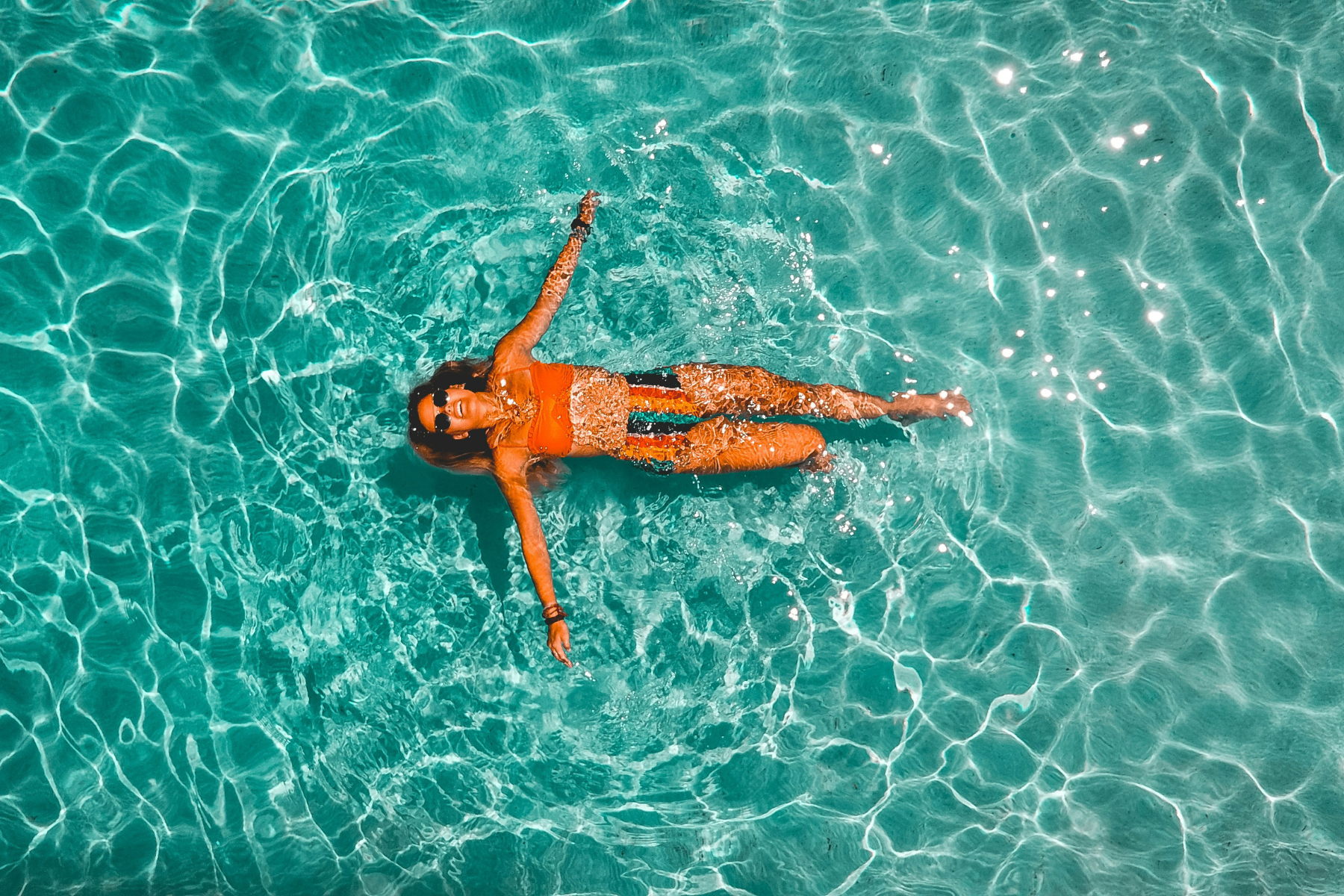
Does chlorine damage your scalp? It does. Chlorine's an oxidizer, and the same chemistry that keeps a pool sanitary also strips the natural oils that protect your scalp and seal each hair shaft. Over a full summer that loss adds up as dryness, flaky irritation, a roughed-up cuticle, and more breakage. None of it's permanent, and a lot of it comes down to how you prep before a swim and how fast you rinse after.
Austin summers are mostly spent in the water. Barton Springs, the neighborhood pool, the backyard setup that runs May through September. If your hair's felt strawlike and your scalp tight and itchy by July, that's not your imagination, and it isn't just summer hair. It usually starts at the scalp, before the lengths ever show it.
Here's what's actually happening. Chlorine goes into a swimming pool to kill bacteria, and it's good at that. It's also a strong oxidizer, which means it pulls electrons out of whatever organic material it touches, your skin and hair included [1]. That reaction's the whole story, so it's worth knowing where it lands.
Start with the Scalp
Your scalp keeps itself comfortable with a thin layer of sebum, the natural oils that lock moisture in and hold the surface barrier together. Chlorinated water dissolves that layer. As one trichologist told TODAY, chlorine pulls out the oils that act as a protectant and leaves skin and hair dry, brittle, and quicker to break [2].
Without those oils, the scalp loses water faster than it can replace it. A clinical study back in 2003 found that the residual chlorine in bathing water measurably lowered the water-holding capacity of the stratum corneum, your outermost skin layer, at concentrations as low as 0.5 mg/L [3]. Most public pools run higher than that. People with sensitive skin notice it first, but the mechanism's the same for everyone, which is why pool season so reliably brings that tight, dry, flaky feeling. Dermatologists even have a name for the reaction when it tips into a rash: pool dermatitis, an irritant response to the pool chemicals stripping the barrier [4]. And a scalp in that state is a weaker foundation for the follicles rooted in it. Chlorine won't cause hair loss on its own, but a barrier that's been stripped for months is not the healthy ground those follicles want, and that's the part most pool advice leaves out.
Then the Hair Itself
The damage you can see lives on the strand. Each hair's wrapped in a cuticle, the overlapping outer scales that lie flat and catch the light when hair is healthy. Chlorine forces those scales to lift, and once the cuticle's open everything else follows [5].
Underneath it, chlorine goes after keratin, the protein that gives hair its strength. The chemist Joe Cincotta describes it attacking the disulfide bonds in keratin that hold structure and stretch, so strands weaken, turn brittle, and snap [1]. Strip the protective lipids off the outside and you get the rest of the summer-hair checklist along with it: frizz, static, tangling, and split ends [6].
A lifted cuticle also leaves hair more porous, and that's the quiet multiplier. The more porous your hair, whether from color, heat, or the chlorine itself, the more eagerly it drinks in the next round of pool water and any metals dissolved in it [7]. That's the real source of the green tint people blame on chlorine: copper in the water oxidizes and binds to porous hair, and chlorine just speeds the reaction along [7]. Color-treated hair is at the front of the line on all of it, because it's already more porous and already worked, and chlorine fades the tone while it weakens the structure. In Austin this stacks with something you're already up against, since our hard water is doing its own version of this to your scalp and hair all year long.
What Actually Helps Your Scalp
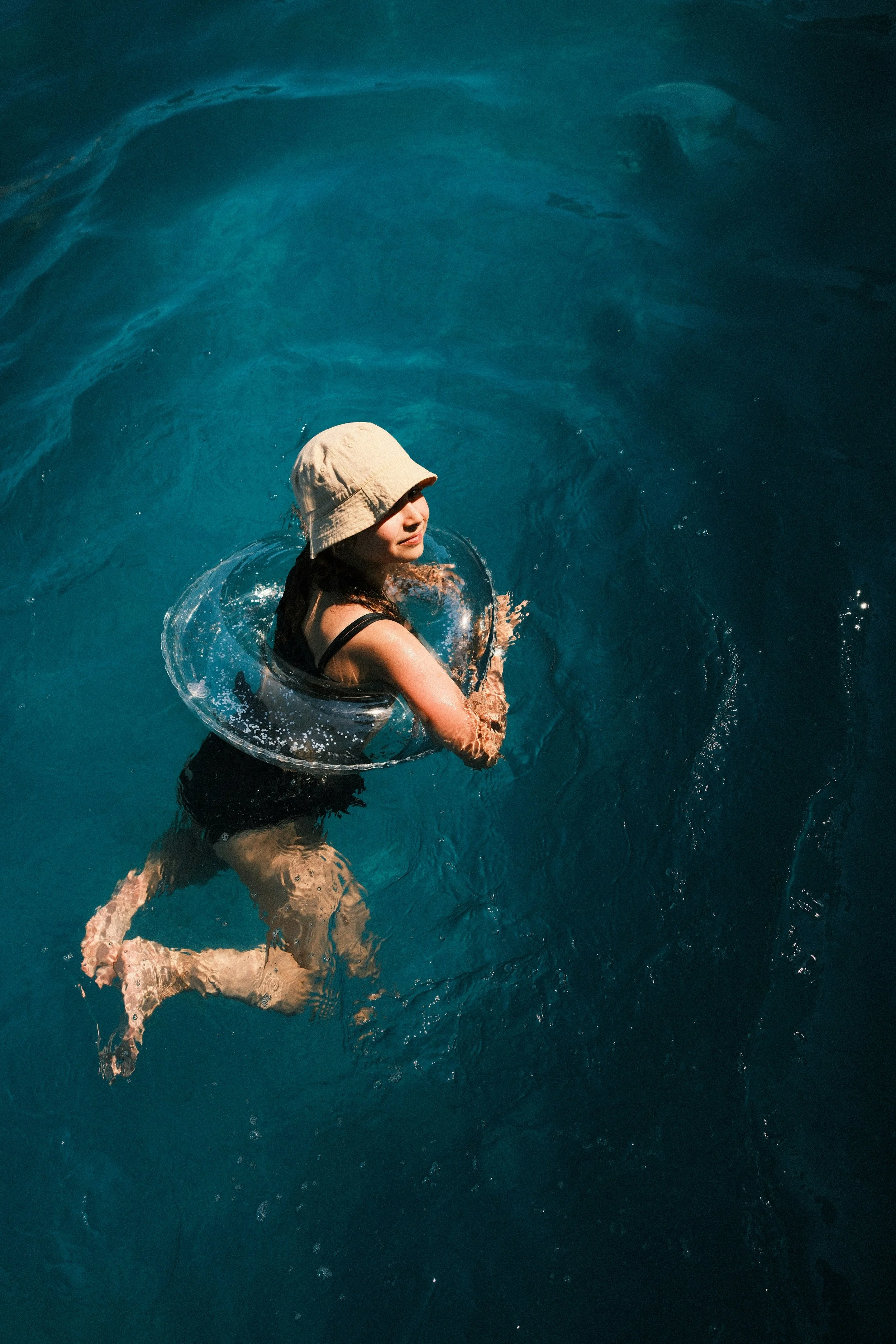
The chemistry's fixed but your exposure isn't, and the habits that matter are almost embarrassingly simple. The single best one is to rinse your hair with fresh water before you get in. Hair behaves like a sponge, so if you saturate it with clean water first there's much less room left to soak up the chlorinated kind [8]. Add a leave-in conditioner or a light coat of natural oils like coconut oil to seal the cuticle, and if you're swimming seriously or protecting color, a snug swim cap over wet, conditioned hair is the most direct block there is [8][9].
Afterward, the priority's speed. Chlorine that dries on the hair is harder to lift and does more damage, so rinse thoroughly with fresh water the moment you're out [9]. From there, a clarifying shampoo about once a week clears chlorine and mineral buildup, with a gentler sulfate-free shampoo for the washes in between so you're not stripping hair you just rescued. If you like a kitchen fix, an apple cider vinegar rinse, roughly one part vinegar to four parts water, helps break down residue and nudges hair back toward its natural pH [10]. Then put the hydration back, conditioner or a hydrating mask, because chlorine leaves hair strands thirsty and that's what restores the softness it pulled out.
When a Rinse Isn’t Enough
Daily rinsing handles what's on the surface. What it can't reach is a whole season of buildup, chlorine and hard-water minerals and product and oxidized debris, settling against a scalp barrier that's been quietly stripped for months. That's the gap The Alchemist is built for.
It's our focused scalp treatment, and it opens the way every Elysian appointment does, with a microscopic look at your scalp so your treatment specialist can actually see what the summer left behind before anything goes on. From there, it's a double enzymatic exfoliation that lifts buildup a rinse never will, and a purifying treatment built on biodynamic thyme and rice wax that clears the scalp while it reactivates circulation and calms the itch and burn chlorine leaves behind.
The aim isn't to undo one swim. It's to reset the barrier and the hydrolipidic film that protects it so the follicles underneath have clean, balanced ground to grow from, with someone whose whole focus for that hour is your scalp.
Spending the summer in the water is the entire point of an Austin summer. A little prep before the swim, a fast rinse after, and a deeper reset when the buildup gets ahead of you is how you get through all of it with your scalp and hair intact.
For more on caring for your scalp as the seasons turn, read our guide to seasonal and lifestyle-based scalp care, or browse the full Elysian blog.
References
[1] Color Wow, with Dr. Joe Cincotta, Chief Chemist. “How to Protect Hair from Chlorine Damage.” 2026. https://colorwowhair.com/blogs/all/how-to-protect-hair-from-chlorine
[2] TODAY (Sara Hallajian, trichologist; Marnie B. Nussbaum, MD, dermatologist). “How to Treat Chlorine-Damaged Hair.” 2025. https://www.today.com/shop/how-protect-hair-chlorine-damage-t289337
[3] Seki T, Morimatsu S, Nagahori H, Morohashi M. “Free residual chlorine in bathing water reduces the water-holding capacity of the stratum corneum in atopic skin.” J Dermatol. 2003;30(3):196-202. PMID: 12692355. https://pubmed.ncbi.nlm.nih.gov/12692355/
[4] Cleveland Clinic. “Is That a Chlorine Rash? What Your Skin Is Telling You.” 2026. https://health.clevelandclinic.org/chlorine-rash
[5] Crystal Quest. “Chlorine and Chloramine: Effects on Skin, Hair and Nails.” 2026. https://crystalquest.com/blogs/health-wellness-home/chlorine-chloramine-effects-skin-hair-nails
[6] Mane (Marnie B. Nussbaum, MD, FAAD). “How Chlorine Damages Your Hair.” https://heymane.com/blogs/mane-stream/how-chlorine-damages-hair
[7] SwimOutlet. “How to Get Chlorine Out of Your Hair: A Step-by-Step Guide.” https://www.swimoutlet.com/blogs/guides/how-to-remove-chlorine-from-your-hair
[8] Decathlon. “How to Protect Your Hair When Swimming.” 2026. https://www.decathlon.co.uk/c/learn/how-to-protect-hair-when-swimming_b850229c-3a29-41ab-a52f-ef6536fc01ef
[9] OLAPLEX. “Post-Pool Haircare: How to Repair Hair Damage from Chlorine.” 2025. https://olaplex.com/blogs/news/post-pool-haircare-repair-hair-damage-from-chlorine
[10] Frizzlife. “Ultimate Guide: Protecting Your Hair from Chlorine.” 2025. https://www.frizzlife.com/blogs/guide/ultimate-guide-protecting-your-hair-from-chlorine
