
What Your Body is Doing in the 72 Hours After a Head Spa
·
·
You walked out of your head spa treatment feeling good. Shoulders down, scalp lighter, that tension you carry in the back of your head finally gone. And then maybe you got home and needed a nap you didn’t plan for. Or you woke up the next morning sleeping better than you have in months and weren’t totally sure why.
A head spa session doesn’t just feel good in the moment — it sets off a sequence of real physical changes that play out over the next three days. Your nervous system, your blood circulation, your hair follicles, your sleep — all of it responds to treatment in ways that keep going long after you leave the room. This is a breakdown of that timeline.
Hours 0 to 8: Your Body Finally Exhales
What Your Nervous System Was Holding
Most of us spend the majority of our day in a low-level stress state. Not necessarily panicking — just on. Alert, slightly braced, managing. Your body calls this “fight or flight” mode, and it is run by a branch of your nervous system that handles stress responses. The problem is it was designed for short bursts, not a permanent setting.
When it stays switched on too long, your stress levels creep up, your heart rate runs a little high, your muscles hold more tension than they need to, and your sleep gets worse. A lot of people live here for so long that it starts to feel like their normal.
Scalp massage interrupts that pattern. The massage techniques and aromatherapy used during a head spa session stimulate thousands of nerve endings on your scalp, which send a signal to your brain to start standing down.
Research shows that even 15 minutes of scalp massage can measurably lower cortisol — the main stress hormone — and start pulling your body out of that overdrive state and into something closer to actual rest. [1]
Why You Might Feel Tired Right After

If you felt like taking a nap a few hours after your head spa session, that’s your body doing exactly what it’s supposed to do. When your nervous system finally shifts out of stress mode, your body takes the opportunity to start catching up on everything it put on hold — tissue repair, digestion, immune function. That costs energy, and you feel it as fatigue.
The tiredness is usually mild and clears within a few hours. What follows it, for most people, is better sleep than they have had in a while. For clients who deal with migraines or regular tension headaches, this window also tends to bring some relief — the drop in muscle tension across the scalp, neck, and shoulders takes a lot of pressure off.
What’s Happening to Your Hair Follicles
While all of that is going on with your nervous system, something else is happening closer to the surface. Scalp massage increases blood flow to your scalp — and that matters more than it might sound.
Each of your hair follicles is fed by tiny blood vessels that deliver the oxygen and nutrients needed to grow healthy hair. When your scalp holds chronic tension, those vessels get partially compressed, and your hair roots end up working with less than they need. Better blood circulation after a head spa session means your follicles get a fuller supply, which creates better conditions for healthy hair growth.
Beyond blood flow, the deep cleansing and exfoliation that happen during your head spa treatment clear out the product buildup, excess oil, and other impurities like dead skin cells that can sit on the scalp and interfere with follicle function. A healthy scalp is a cleaner, more balanced one — and that’s what your hair actually grows out of.
Clients dealing with dryness, dry scalp, oiliness, excess sebum, or scalp conditions that tip toward dandruff often notice the scalp feels more balanced in the days following a session. Oil production tends to regulate, hydration improves, and the scalp condition overall shifts toward healthier.
That’s a combination of better blood circulation, detoxification through lymphatic drainage, and the nourishing essential oils, serums, and hair masks applied during treatment continuing to absorb. [2]
Hours 24 to 48: Your Body Does Its Repair Work
Why Your Scalp Might Feel a Little Tender
Some people — especially first-timers or anyone who came in carrying a lot of tension — notice some scalp tenderness on day one or two. A mild achiness across the crown or temples, like the feeling after a good workout. That’s exactly what it is.
A thorough head spa session works through multiple layers of scalp tissue. The massage techniques reach the deeper connective tissue underneath the surface, and your body responds to that the same way it responds to any effective physical work — with a mild recovery response. Repair cells get sent in. The tissue gets rebuilt with more flexibility. The soreness is the evidence of a deep rejuvenation process actually happening, not a sign that something went wrong.
It should be mild, steady, and gone within a day or so. Sharp or prolonged pain is not normal and is worth checking on.
Your Lymphatic System is Clearing House
Your lymphatic system is basically your body’s internal drainage network. It collects waste — old cellular material, inflammatory compounds, metabolic byproducts — and moves it out through lymph nodes. The catch is that unlike your blood, lymph fluid does not have a pump. It needs physical movement and manual pressure to get flowing.
A head spa session gives it a significant push. The scalp, face, and neck area has a high concentration of lymph nodes, and professional treatment gets that drainage moving in a way that normal daily activity does not.
The detoxification process this triggers is part of what makes a head spa experience genuinely different from at-home scalp care — it reaches a level of clearance that a self-care routine simply can’t replicate.
A small number of people feel slightly off in this window — a little sluggish, a mild headache, vaguely under the weather. That’s the detox response, and it usually passes within half a day. Drinking an extra couple glasses of water helps move things along faster.
Your Sleep Gets Noticeably Better
The most common thing clients report in the day or two after a head spa session is that their sleep improves noticeably. This is one of the most well-documented effects of massage therapy, and the reason for it is pretty direct.
When cortisol drops, your body produces more serotonin. Serotonin converts into melatonin — the hormone that controls when you fall asleep and how deeply you sleep. Studies using sleep lab measurements show that people who receive massage therapy fall into deep sleep faster, spend more time in the most restorative stages of sleep, and wake up feeling like they actually got rest rather than just logging hours.
If you have been waking up tired, lying awake in the middle of the night, or just not sleeping as deeply as you used to — what you notice on night two after your session is not a coincidence. It is your body taking advantage of a lower stress baseline to actually recover. Mental clarity tends to follow in the day or two after that, as a downstream effect of real rest and lower stress levels. [3] [4]
Hour 72: Everything Peaks at Once
Day Three is When Clients Notice the Most
By the end of the third day, most of the individual changes we have described have run their course and landed somewhere better than where they started.
The inflammation from tissue repair has settled. The lymphatic detoxification is complete. Your stress levels are at their lowest post-treatment point. Your sleep quality has been meaningfully better for two nights in a row.
This is why day three tends to feel different in a way that is hard to miss. It’s not one thing, it’s several processes converging at the same time. Scalp tightness down. Mental clarity up. Tension in the neck and shoulders noticeably lower. A general sense of overall well-being that does not feel like the artificial buzz of caffeine but more like your system running the way it is supposed to.
This is what a consistent scalp care and wellness practice actually produces. Not a dramatic transformation from a single session, but a real, compounding shift in how your body feels — and a clearer picture of what your baseline could look like with regular head spa treatments.
What’s Happening with Your Hair
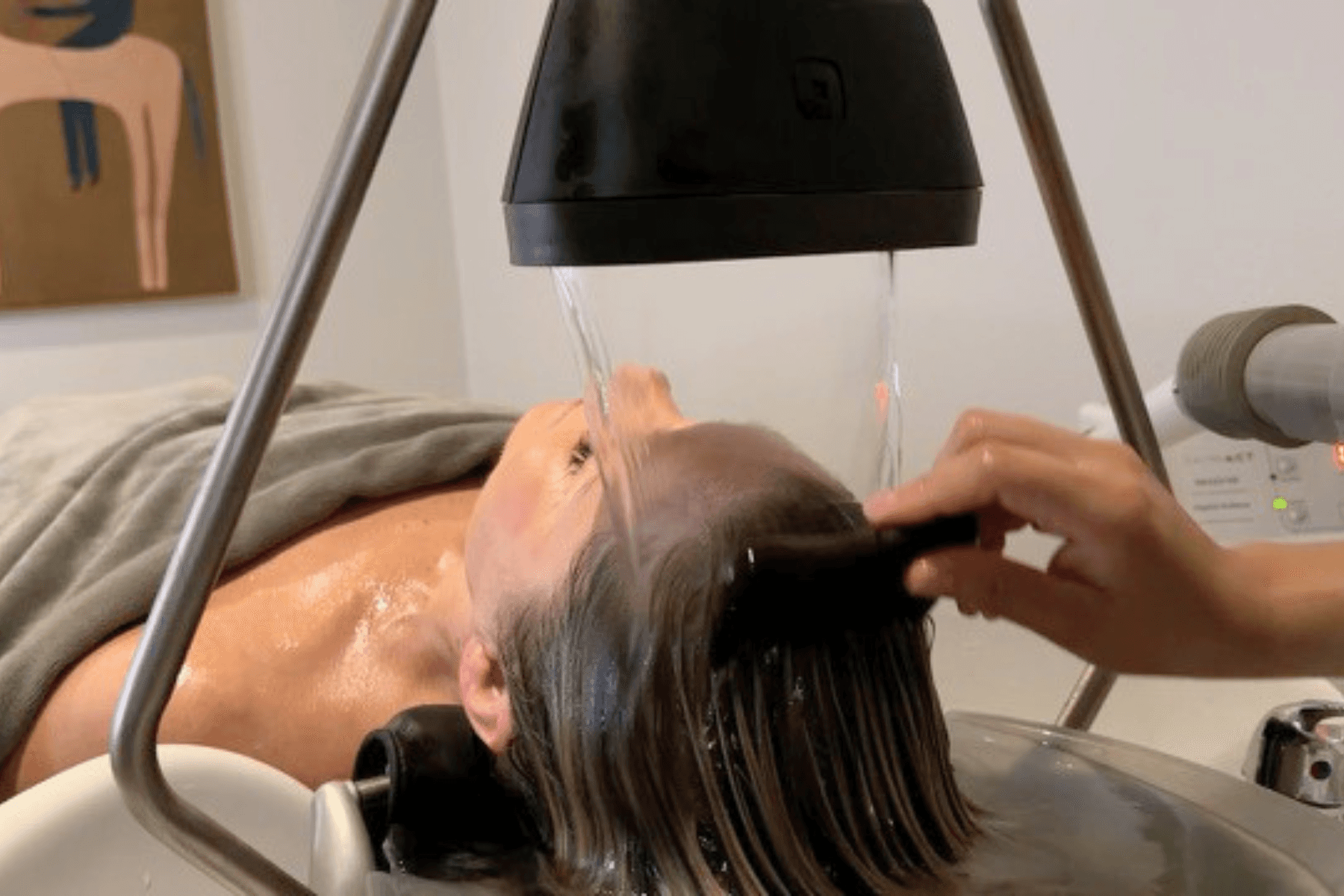
Here’s where it gets interesting for anyone thinking about hair health long-term. Research on dermal papilla cells — the cells at the base of each hair follicle that essentially run the hair growth process — shows that the physical stretching and pressure from scalp massage triggers changes in how those cells behave. They start expressing genes related to hair growth more actively. They wake up, essentially.
You’re not going to see new hair by day three. Hair growth is slow, and visible results take weeks to months. But the follicle-level response to your head spa session starts at the 72-hour mark.
For clients dealing with hair loss, reduced hair quality, or scalp concerns that a trichologist would flag — thinning, shedding, decreased hair vitality — this is the beginning of a trajectory that consistent treatment builds on.
The same study that identified these cellular changes also found that people who kept up a regular scalp massage practice for 24 weeks had significantly thicker hair shafts than the control group. The improvement in hair health tracked with consistency, not with how intense any single session was. [2]
Your Stress Response Has Actually Shifted
The last thing worth noting at 72 hours — and arguably the most important — is something you can’t see in a mirror. Research measuring cortisol levels after massage therapy shows that the stress relief does not just last through the session. It extends for days, and with regular head spa treatments, it starts to shift your baseline.
What that means practically is that the things that used to spike your stress — a difficult email, a bad commute, a packed schedule — produce a smaller reaction. Not because anything external changed, but because your nervous system is no longer running at maximum sensitivity. That shift in overall well-being is real and measurable. It is also one of the clearest arguments for making this a regular part of your wellness and self-care practice rather than a one-time thing. [5]
After 72 Hours: Why You Want to Come Back
One Session vs. Making It a Habit
A single head spa session or professional scalp treatment does a lot. The blood circulation boost, the scalp health reset, the stress relief, the sleep improvement — all of that is real and happens in a single visit. But the research is pretty clear that the bigger gains come from consistency.
Studies on scalp massage frequency show a direct relationship between total treatment time and results. In one study, participants who accumulated the most hours of scalp massage over time showed roughly double the improvement in hair quality compared to those with fewer sessions. The sessions were not longer or more intense — there were just more of them.
A separate study found that 68.9% of people who kept up a daily self-massage routine over five months saw measurable improvement in hair loss or movement toward healthy hair growth. The mechanism is the same as professional treatment — cumulative stimulation, consistent blood circulation, and sustained signaling to hair follicles — just at a lower intensity. [6]
How Often Actually Matters
The 72-hour benefits are real, but they are also time-limited. Cortisol starts drifting back up around day seven to ten. Muscle tension rebuilds gradually. Your sleep quality will return to its pre-treatment pattern if nothing reinforces the shift.
For hair growth and scalp health goals, monthly head spa treatments match the protocols used in the clinical research — enough frequency to keep follicles consistently stimulated without waiting so long between sessions that the progress resets. For stress relief and sleep quality, every two to three weeks maintains the nervous system shift more reliably. Both are supported by the evidence.
The 72-hour window is not the finish line. It is the consolidation point — where your body locks in the changes from one session before the next one builds on top of them.
At Elysian
Every head spa session at Elysian starts with a trichoscope scalp analysis — a clinical look at your scalp health, follicle condition, and any scalp concerns worth addressing before treatment begins. It is how we make sure the session is actually matched to what your scalp needs, not just a standard protocol applied to everyone.
If you are dealing with hair loss, thinning, shedding, or scalp concerns that feel like more than a hair care issue — a FoLix consultation is where to start. FoLix is Elysian’s clinical hair growth program, and the consultation is designed to figure out what is actually driving your pattern before recommending anything.
References
• Field, T., et al. (1996). Massage therapy reduces anxiety and enhances EEG pattern of alertness and math computations. International Journal of Neuroscience, 86(3–4), 197–205.
• Koyama, T., et al. (2016). Standardized scalp massage results in increased hair thickness by inducing stretching forces to dermal papilla cells in the subcutaneous tissue. ePlasty, 16, e8.
• Field, T. (2014). Massage therapy research review. Complementary Therapies in Clinical Practice, 20(4), 224–229.
• Garland, S. N., et al. (2018). Improving sleep quality in people with chronic insomnia using mindfulness-based therapy for insomnia and massage therapy. Sleep Medicine, 50, 97–104.
• Moraska, A., et al. (2010). Physiological adjustments to stress measures following massage therapy: A review of the literature. Evidence-Based Complementary and Alternative Medicine, 7(4), 409–418.
• English, R. S., & Barazesh, J. M. (2019). Self-assessments of standardized scalp massages for androgenic alopecia: Survey results. Dermatology and Therapy, 9(1), 167–178.


