Female Pattern Hair Loss & the Ludwig Scale: What's Actually Happening to Your Hair
·
·
Hair loss is something a lot of women quietly carry. It shows up first in small, easy-to-dismiss ways — a ponytail that feels thinner in your hand, a central parting that looks a little wider in the mirror, more strands collecting in the drain than you remember. And because it tends to come on gradually, it’s easy to explain away. Stress. A new shampoo. Seasonal shedding.
But for millions of women, what’s actually happening is female pattern hair loss — a progressive, hormonally driven condition that, without the right knowledge and a targeted approach, keeps advancing quietly in the background. [2]
At Elysian, we start with the full picture. Here’s what female pattern hair loss actually is, how the Ludwig Scale is used to measure and track it, and what a genuinely informed starting point for your hair growth journey looks like.
What Is Female Pattern Hair Loss?
Female pattern hair loss — also referred to as FPHL, female androgenetic alopecia, or androgenic alopecia — is the most common cause of permanent hair thinning in women, distinct from autoimmune conditions like alopecia areata. It’s driven by a genetic sensitivity of the hair follicles to androgens (specifically dihydrotestosterone, or DHT), which causes those follicles to miniaturize over time. [4] Each growth cycle, the affected follicles produce a finer, shorter strand — until eventually, they stop producing visible hair altogether.
What makes FPHL distinct from male pattern baldness is the pattern itself. Male androgenetic alopecia tends to follow the Norwood Scale, beginning with a receding frontal hairline and progressing backward toward the crown. Female hair loss is far more diffuse. The thinning spreads across the top of the head and the vertex, while the frontal hairline often remains intact — at least in the early, moderate, and advanced stages. There’s rarely a clearly defined bald area. What you notice instead is density. The scalp becomes more visible. The part looks different. The overall volume shifts.
This diffuse quality is also part of what makes FPHL so easy to miss — or misattribute — in the early stages. It doesn’t announce itself the way a receding hairline does. It’s gradual enough that by the time most women seek out a trichology assessment or dermatology consultation, a meaningful degree of hair loss has already occurred.
What Causes It?
Female pattern hair loss is androgenic at its core — meaning it’s rooted in a genetic predisposition for hair follicles to be sensitive to androgen hormones. But the hormonal picture in women is more complex than in men, and a number of factors can accelerate or intensify the progression of hair loss.
Hormonal shifts are among the most significant drivers. Postpartum changes, perimenopause, thyroid dysfunction, and polycystic ovarian syndrome (PCOS) all affect androgen levels and can push women from subtle early-stage thinning into more pronounced hair loss faster than genetics alone would. [3] It’s why so many women experience a noticeable change in the months after pregnancy, or during the hormonal transitions of their 40s and early 50s.
Telogen effluvium — a temporary but sometimes significant shedding phase triggered by physical or emotional stress, illness, rapid weight loss, or nutritional deficiency — can overlap with or accelerate androgenetic alopecia. [5, 6] The two conditions can be difficult to distinguish without a proper scalp and hair assessment, and they often coexist.
Nutritional factors play a larger role than most women realize. Iron, ferritin, vitamin D, and zinc deficiencies are common contributors to female hair loss — and the connection between what’s happening internally and what’s showing up at the scalp is something that gets missed far too often in a standard clinical setting. [7] Understanding that relationship is a core part of how Katie approaches every consultation.
Genetics remain the underlying factor in most FPHL cases. Family history on either side — maternal or paternal — is relevant, and a pattern of hair thinning in female relatives is one of the most telling indicators.
Understanding the Ludwig Scale
The Ludwig Scale — developed by dermatologist Dr. Erich Ludwig in 1977 — is the foundational classification system used to describe the progression of female pattern baldness. [1] It remains one of the most widely used tools in trichology and dermatology for assessing female androgenetic alopecia, guiding treatment options, and tracking the degree of hair loss over time.
Where the Norwood Scale maps male pattern baldness based on frontal hairline recession and crown thinning, the Ludwig Scale is built around how FPHL actually presents in women: centrally, across the top of the head, with a preserved frontal hairline in the earlier stages.
The system organizes female pattern hair loss into three Ludwig grades:
Ludwig Grade I: Early Stages
Grade I is where diffuse thinning first becomes visible. The central parting widens slightly, hair density across the top of the scalp begins to decrease, and a finer hair texture may be noticeable when styling. The frontal hairline remains intact, and from a distance the hair may still look relatively full — but the change is there if you know where to look.
This is the most important Ludwig stage to catch — hair follicles at Grade I are still active, still producing. Miniaturized, but functioning. Treatment here works with follicles that are still reachable.
Many women in Ludwig Grade I attribute what they’re seeing to normal variation or temporary shedding and move on. By the time they seek guidance, they’re already progressing toward Grade II. Early consultation matters — act intentionally while the window is open.
Ludwig Grade II: Moderate Progression
By Grade II, the progression of hair loss is unmistakable. The central parting is visibly wider, hair density across the top of the head has dropped significantly, and the scalp becomes visible in natural light. The ponytail is noticeably thinner. Styling takes more effort to achieve the same coverage.
At this stage, a more active and consistent approach to hair loss treatment, often involving topical solutions like minoxidil, becomes essential. The goal shifts from early prevention to slowing progression and supporting whatever regrowth the follicles can still produce.
Ludwig Grade III: Advanced Hair Loss
Grade III represents severe hair loss, with near-complete loss of hair density across the top of the scalp. The frontal hairline may also be affected at this point. Bald areas — while less sharply defined than in male pattern baldness — are visible and significant.
Advanced hair loss at Ludwig Grade III is harder to address with non-invasive treatment alone and may require surgical considerations like a hair transplant. That said, even at this stage, some follicles may still be viable, and a thorough assessment is worth having before any assumptions are made about what’s possible.
Why Early Intervention Changes Everything
The biology of hair follicles is central to understanding why timing matters so much in female pattern hair loss. Once a follicle has fully miniaturized and stopped producing hair, reactivating it without surgical intervention becomes extremely difficult. The follicle is still there — it’s just no longer responding to the signals that drive active growth.
At Ludwig Grade I, most follicles are still producing hair — finer and shorter than they once did, but producing. Treatment at this stage works with follicles that are still alive and reachable. By Ludwig Grade III, that window has narrowed considerably, and regrowth becomes far less predictable.
If you’ve noticed your hair parting looking different, your ponytail feeling lighter, or more shedding than feels normal — that’s a signal worth exploring now.
What Makes Elysian Different
Many women experiencing female pattern hair loss arrive at Elysian having already done the research — the Ludwig Scale, the stages of hair loss, the types of hair loss. What changes at a FoLix consultation with Katie is the depth of the assessment itself.
As a Certified Trichologist and Acute Care Nurse Practitioner, Katie looks at the whole person. Scalp and follicle health, yes — and also nutrition, hormonal history, lifestyle, and the systemic factors that are quietly shaping what’s happening at the scalp. The FoLix consultation is a real clinical conversation about your hair and what a tailored path forward actually looks like for you.
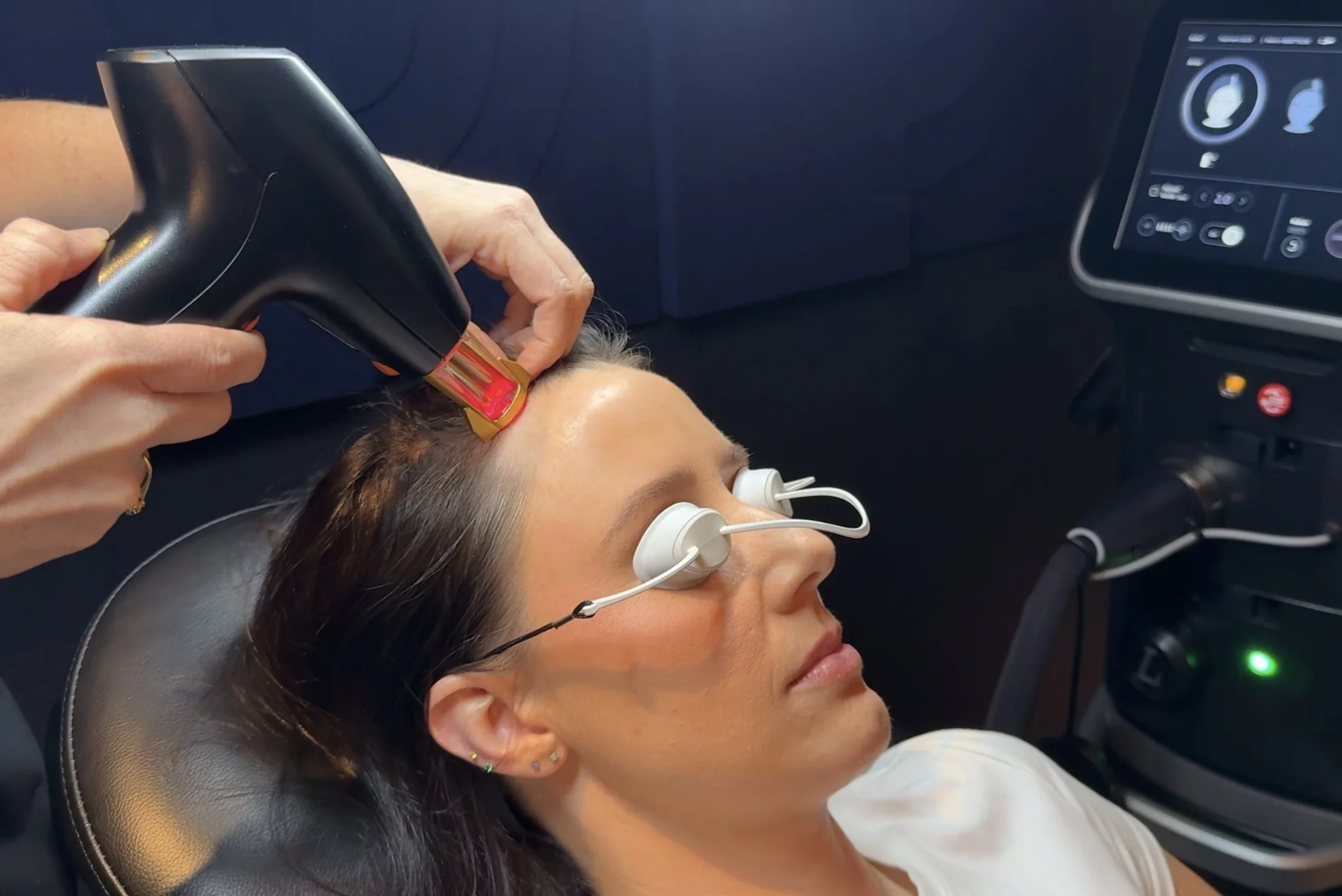
From there, she’ll assess whether FoLix laser therapy — our FDA-cleared, clinical-grade low-level laser therapy — is the right fit for where you are on the Ludwig Scale. For women in the early and moderate Ludwig stages with active hair follicles still responding, FoLix is one of the most effective non-invasive tools available for slowing the progression of hair loss and supporting meaningful hair growth over time.
Come In and Let’s Take a Closer Look
Female pattern hair loss is one of the most treatable forms of hair thinning when it’s caught early and approached with the right expertise. At Elysian Head Spa in Austin, complimentary FoLix consultations are where that process starts — a personal, clinically informed assessment of your hair, your scalp, and what your hair actually needs.
Book your complimentary FoLix consultation at Elysian Head Spa at our new flagship location, 3408 West Avenue, Austin, TX 78705.
References
• Ludwig E. Classification of the types of androgenetic alopecia (common baldness) occurring in the female sex. British Journal of Dermatology. 1977;97:247–254. https://doi.org/10.1111/j.1365-2133.1977.tb15179.x
• Gupta AK, Wang T, Economopoulos V. Epidemiological landscape of androgenetic alopecia in the US: An All of Us cross-sectional study. PLOS ONE. 2025;20(2):e0319040. https://doi.org/10.1371/journal.pone.0319040
• Owecka B, Tomaszewska A, Dobrzeniecki K, Owecki M. The hormonal background of hair loss in non-scarring alopecias. Biomedicines. 2024;12(3):513. https://doi.org/10.3390/biomedicines12030513
• Chen S, Li L, Ding W, et al. Androgenetic alopecia: an update on pathogenesis and pharmacological treatment. Drug Design, Development and Therapy. 2025;19:7349–7363. https://doi.org/10.2147/DDDT.S542000
• Durusu Turkoglu IN, Turkoglu AK, Soylu S, Gencer G, Duman R. A comprehensive investigation of biochemical status in patients with telogen effluvium: Analysis of Hb, ferritin, vitamin B12, vitamin D, thyroid function tests, zinc, copper, biotin, and selenium levels. Journal of Cosmetic Dermatology. 2024;23:4277–4284. https://doi.org/10.1111/jocd.16512
• Baki Yılmaz F, et al. Retrospective review of 2851 female patients with telogen effluvium: a single-center experience. PubMed. 2025. https://pubmed.ncbi.nlm.nih.gov/39950230/
• Kansal A, et al. Quantitative analysis of selected circulating hematological biomarkers, essential minerals, vitamins, and thyroid hormones in females affected by hair loss. Diseases. 2025;13(11):352. https://doi.org/10.3390/diseases13110352
